JNT 01 · Joinery
Impossible dovetail
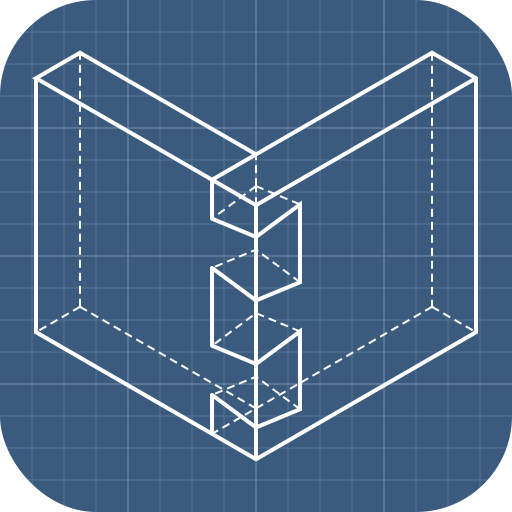
A dovetail with tails on both boards: they flare out against each other and interlock for good, without glue.
The impossible dovetail joins two boards at a corner, just like a standard dovetail. But where a standard dovetail has tails on one board and pins on the other, here both boards have tails that flare out. Once together, the boards cannot be pulled apart in any direction.
For the same reason the joint cannot be assembled the usual way. The tails are compressed with heat, moisture and pressure so they pass each other, and then swell back to their shape in the joint. How to do this reliably is what the experiments investigate.

How it holds
- Connects
- Two boards at a corner
- Holds by
- Tails on both boards, flaring out against each other
- Assembly
- Tails compressed to pass, then recovered in the joint
- Glue, fasteners
- None
Interactive model
Turn the joint around, play its assembly and change its proportions in the settings. Drag to rotate, scroll or pinch to zoom, and right-drag or drag with two fingers to pan.
Used in
- FRN 01 Impossible bench A solid wood bench with impossible dovetails between the seat and the legs, and frustum tenons holding the stretcher. Seating Details
- FRN 02 Wall cabinet A solid wood wall cabinet with impossible dovetails on the casing and frustum tenons holding the divider and back panel. Storage Details
- FRN 04 Bookshelf A standalone solid wood bookshelf without a back: impossible dovetails at the top, and every shelf held by frustum tenons through the sides. Storage Details
- FRN 05 Live edge coffee table A coffee table of two live-edge slabs side by side, each joined into a top and two legs by impossible dovetails, and held together across the gap between them by frustum butterflies. Tables Details