
Furniture · Solid wood only
Furniture of pure wood
No screws, no glue, no metal. Every piece is held together by its joints alone, and finished, if at all, with natural oil or wax.
Only wood
Wood moves: it swells when the air is humid and shrinks when it is dry. Furniture made of wood alone moves with it, instead of fighting it with metal and glue.
01
No fasteners
No screws, nails, pins or brackets. Metal corrodes, and it works loose as the wood around it swells and shrinks with the seasons.
02
No glue
Glue lines fail under the same seasonal stresses. Joints that lock by their shape let the wood move and last for centuries, as old Japanese temples show.
03
Natural finish, or none
Each piece is left bare or finished with a natural oil or wax only. It stays pure wood: easy to repair, refinish and, one day, return to nature.
Furniture
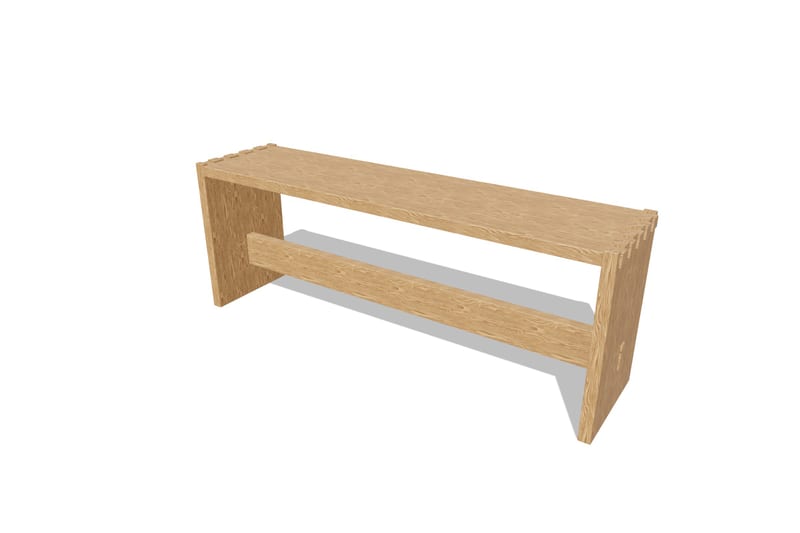
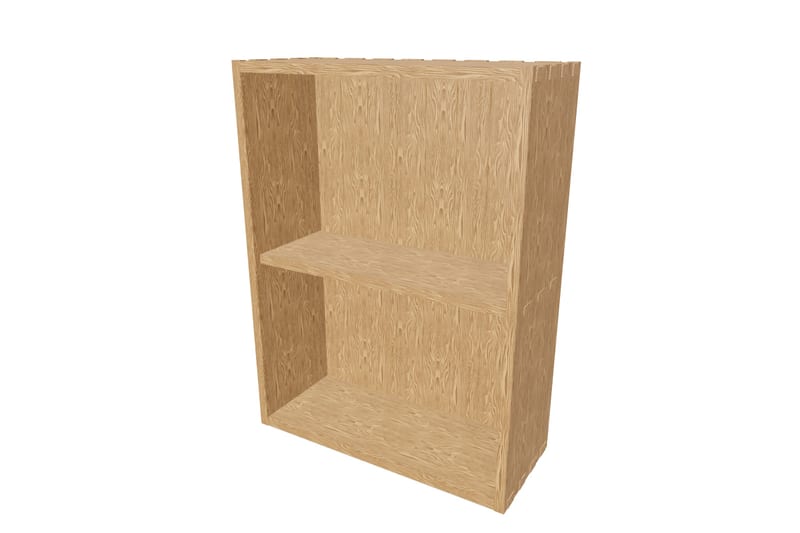
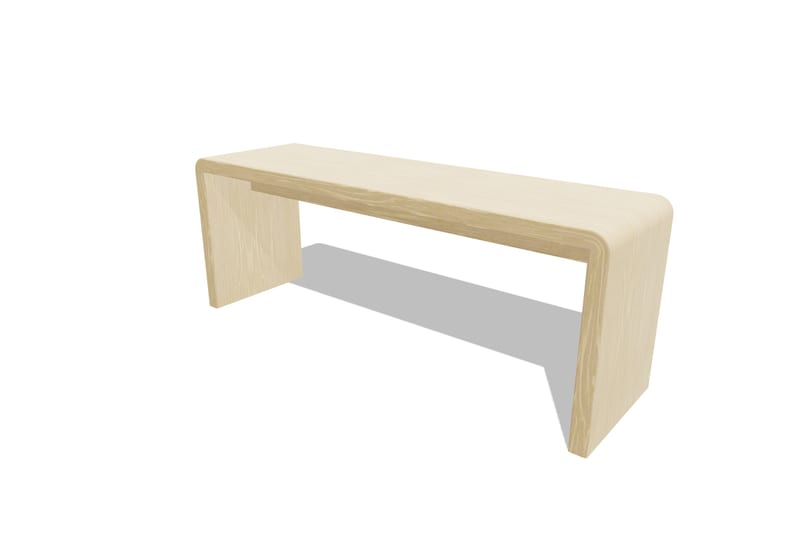
All furnitureBenches, cabinets and more, in development. Each piece will be made to order, in the wood of your choice.


How it holds
All joineryTraditional joints, and new ones made possible by heat, moisture and pressure: wood compressed to fit swells back inside the joint and locks the parts together for good.
 JNT 01 Impossible dovetail A dovetail with tails on both boards: they flare out against each other and interlock for good, without glue. Details
 JNT 02 Frustum tenon A tenon that widens towards its end, wedged into its mortise: a form fit in all three dimensions that tightens itself. Details
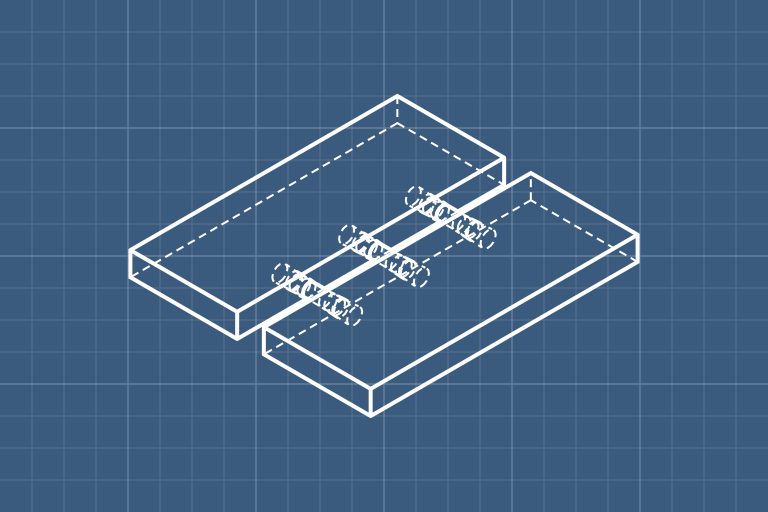 JNT 03 Frustum dowels Double-flared dowels that join boards edge to edge into wide panels, locked in tapered sockets. Details
 JNT 04 Frustum butterfly A butterfly key across a crack, wider at its bottom than at its top: it holds the crack and cannot lift out, without glue. Details
Wood
About the woodEuropean hardwoods, chosen per piece for strength, how well they bend and how they move.
Developed in the open
All experimentsEvery joint is tested before it goes into furniture. The experiments are filmed for YouTube and funded by patrons, and after 90 days their results and data are released to everyone under CC BY 4.0.
About
I'm Maikel, a theoretical physicist from a family of carpenters, and the first of them to do a PhD. Dr Bugholz is where the two meet: furniture made of nothing but wood, and the research it takes to make it hold.
Screws and glue fail in the end, through corrosion or the stresses of wood moving with the seasons. Wood joined to wood absorbs those stresses. So I take traditional joinery further, with joints that the precise thermo-hydro-mechanical modification of wood makes possible today, such as the impossible dovetail and the frustum tenon.
Each new joint starts as an experiment: a question, a test and a result, shared in full on this site and explained on YouTube.


Inquiries
Interested in a piece?
Ask about a design, its sizes and the wood species, or about a piece made for your space.