Index
Joinery
The joints that hold the furniture together without glue, screws or any other fastener. Some are centuries old, some are new; each novel joint is tested in the experiments before it goes into a piece.
New joints · Thermo-hydro-mechanical joinery
Heat, moisture and pressure change the shape of wood without chemicals or glue.
The new joints are built on this. Pre-compressed wood shows a shape recovery, or springback, when it takes up moisture again. Used inside a joint, it expands and locks the parts together permanently: a connection that tightens itself and withstands the seasonal movement of the wood.
01
Compress
Heat and moisture soften the lignin that binds the wood fibres. Under pressure, the part of a joint that has to pass is compressed.
02
Assemble
Dried in its compressed shape, the part is smaller than its final form, and slides into a joint it could not otherwise enter.
03
Recover
Exposed to moisture in the joint, the compressed wood springs back towards its original shape and locks the parts together for good.

 JNT 01 Impossible dovetail A dovetail with tails on both boards: they flare out against each other and interlock for good, without glue. Used in 4 pieces Details
 JNT 02 Frustum tenon A tenon that widens towards its end, wedged into its mortise: a form fit in all three dimensions that tightens itself. Used in 3 pieces Details
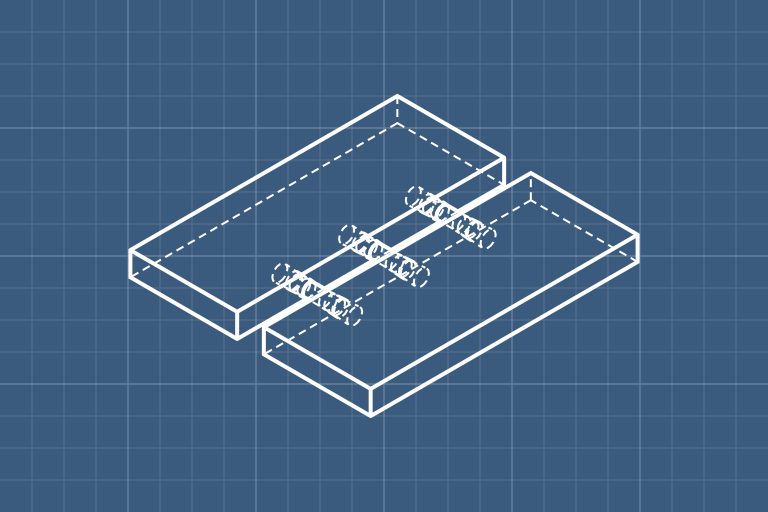 JNT 03 Frustum dowels Double-flared dowels that join boards edge to edge into wide panels, locked in tapered sockets. Not in a piece yet Details
 JNT 04 Frustum butterfly A butterfly key across a crack, wider at its bottom than at its top: it holds the crack and cannot lift out, without glue. Used in 1 piece Details
Traditional joints
Joints that woodworkers have made without glue for centuries, and that hold by their shape alone.
They need no compression: a wedge pulls the tusk tenon tight, a dovetail slid into its housing holds the shelf, and a board bent round a corner needs no joint at all.
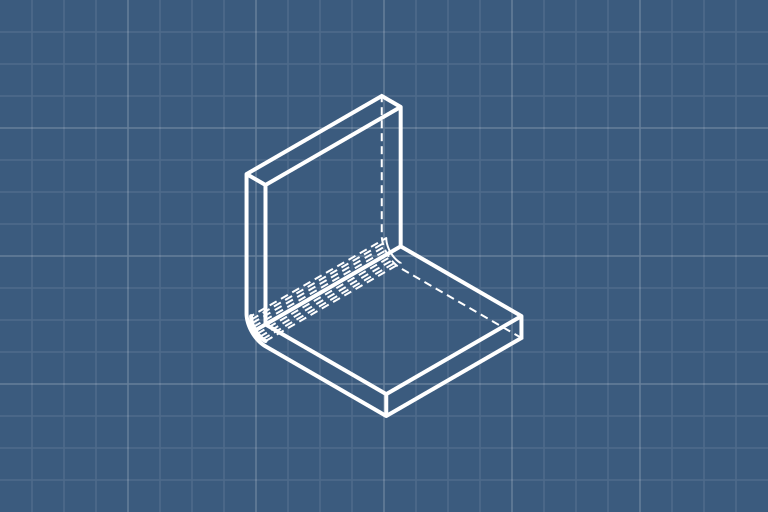 JNT 05 Bentwood corner One board kerfed, steamed and folded round a corner, so the grain runs on unbroken and there is no joint at all. Used in 1 piece Details
 JNT 06 Tusk tenon A through tenon that stands out beyond its mortise, held by a tapered wedge driven through it: it pulls the joint tight, without glue, and comes apart again. Not in a piece yet Details
 JNT 07 Sliding dovetail The end of one board slid along a dovetail into a housing across the middle of another: it holds the two together across the joint, without glue. Not in a piece yet Details